





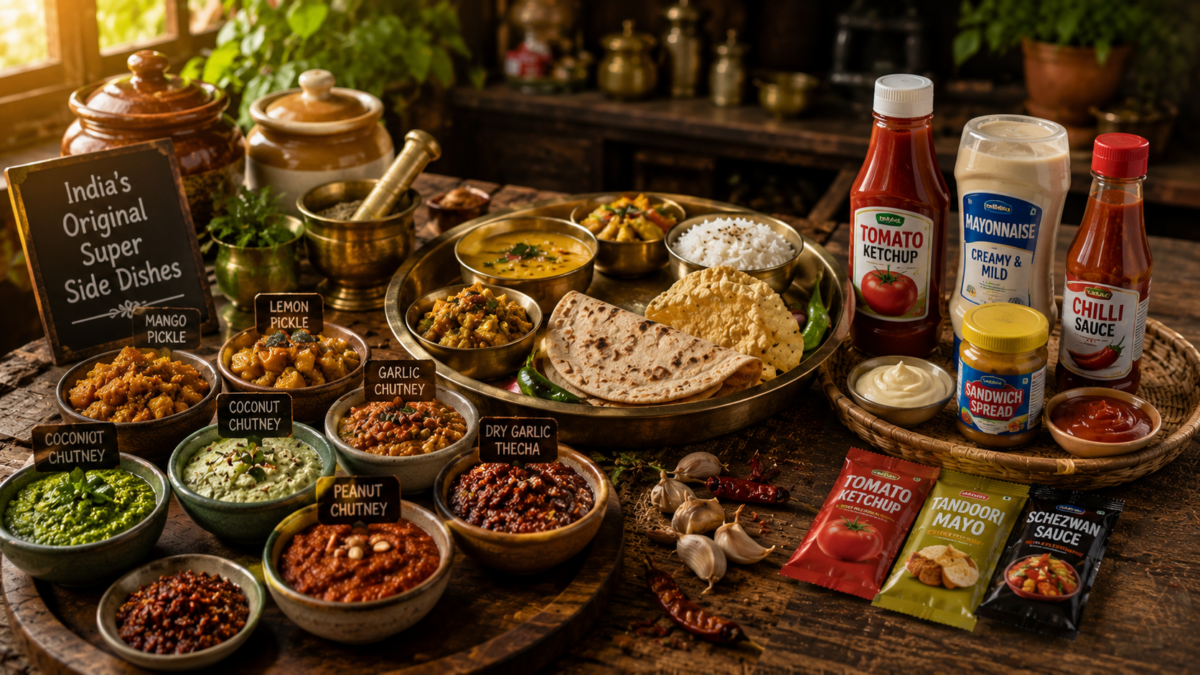
Before Ketchup and Mayonnaise: India’s Original Super Side Dishes
Food is not just about feeding the body; it’s about preserving traditions, culture, and wisdom.”
The Rise of Modern Condiments
Open any modern refrigerator today, and you’re likely to find bottles of ketchup, mayonnaise, chilli sauce, and various packaged dips neatly lined up on the shelves. These condiments have become a regular part of our meals, accompanying everything from sandwiches and burgers to snacks and quick meals. Their convenience and familiar taste have made them household staples across the world. Yet, long before ketchup and mayonnaise became popular, Indian kitchens had their own collection of flavour-packed accompaniments that elevated every meal. Chutneys, pickles, podis, thechas, and spice blends were not simply added for taste. They were carefully crafted to complement food, support digestion, preserve seasonal ingredients, and provide additional nourishment. While modern sauces are often viewed as flavour enhancers, traditional Indian accompaniments were designed with a deeper purpose in mind. They brought together taste, nutrition, preservation, and wellness in a way that reflected centuries of culinary wisdom.
The Original Side Dishes That Defined Indian Meals
For generations, Indian meals have been incomplete without a small serving of chutney or pickle on the side. Whether it was coconut chutney served with breakfast in the South, mint chutney accompanying snacks in the North, garlic chutney enhancing meals in Maharashtra, or mango pickle adding a burst of flavour to a simple dal-rice meal, these accompaniments were deeply woven into everyday eating habits. Unlike many modern condiments that rely heavily on sugar, preservatives, and artificial flavouring, traditional chutneys and pickles were made using fresh herbs, vegetables, fruits, spices, seeds, and natural oils. Every ingredient served a purpose. The result was not only a richer dining experience but also a more balanced meal. These recipes were often passed down through generations, with each family having its own unique methods and secret ingredients. What appeared to be a simple side dish was often the product of years of culinary knowledge and cultural tradition.
More Than Just Taste
One of the biggest differences between traditional Indian accompaniments and many modern sauces lies in their nutritional value. A spoonful of mint chutney brings together fresh herbs, spices, and natural ingredients that contribute flavour while adding valuable nutrients. Coconut chutney provides healthy fats and fibre. Garlic chutney contains ingredients traditionally valued for supporting immunity and digestion. Pickles prepared with spices and oils offer intense flavour while preserving seasonal produce for months. In contrast, many commercially produced sauces are primarily designed to satisfy taste preferences. They often contain refined sugars, stabilisers, preservatives, artificial flavourings, and ingredients that extend shelf life rather than nutritional value. This does not mean ketchup or mayonnaise should never be enjoyed. However, it highlights an important distinction: traditional accompaniments were created to complement both flavour and function, whereas many modern condiments focus primarily on convenience and taste.
The Science Hidden in Traditional Recipes
Our ancestors may not have used modern nutritional terminology, but they understood food remarkably well. Many traditional chutneys combine ingredients that stimulate digestion and enhance appetite. Herbs, spices, seeds, and natural acids were often selected to balance meals and support the body’s natural processes. Pickles represent another fascinating example of traditional food wisdom. Long before refrigeration became common, communities developed preservation techniques that allowed seasonal fruits and vegetables to be enjoyed throughout the year. The use of salt, spices, oils, and natural fermentation methods helped preserve food while creating complex flavours that continue to be cherished today. These practices were not merely about extending shelf life. They were about reducing waste, making seasonal foods accessible year-round, and ensuring that meals remained enjoyable and satisfying.
“Traditional foods survived for centuries because they offered more than flavour—they offered purpose.”
The Role of Chutneys and Pickles in a Balanced Meal
Traditional Indian meals are often celebrated for their balance. A typical thali includes a variety of flavours and textures working together to create a complete dining experience. Chutneys and pickles play an important role within this balance. Their bold flavours can transform simple dishes, making everyday meals more enjoyable. A plain bowl of khichdi becomes more exciting with a spoonful of pickle. Idlis become memorable when paired with fresh chutney. Even a simple roti and vegetable dish can feel complete when accompanied by a flavourful side. These accompaniments encourage variety in the diet and help prevent meals from becoming repetitive. In many ways, they demonstrate how small additions can make a significant difference to both taste and satisfaction.
What Modern Living Can Learn from Traditional Eating
As modern lifestyles become increasingly fast-paced, many people rely on convenience foods and ready-made sauces to save time. While there is nothing wrong with convenience, there is value in revisiting traditional practices that have stood the test of time. Homemade chutneys and pickles encourage the use of fresh ingredients, seasonal produce, and natural flavouring. They connect us with culinary traditions while reducing dependence on heavily processed products. They remind us that food can be both delicious and nourishing without requiring complex ingredients or artificial enhancements. Perhaps one of the greatest lessons traditional accompaniments teach us is that food should not only taste good—it should contribute to a richer and more mindful eating experience.
Preserving More Than Food
When families prepare pickles together during mango season or grind fresh chutneys using recipes passed down through generations, they are preserving more than ingredients. They are preserving memories, traditions, and cultural identity. Every jar of pickle tells a story of seasonal abundance. Every chutney recipe carries the influence of a region, a family, and a way of life. These foods connect us to our heritage and remind us of the values that shaped traditional cooking—simplicity, resourcefulness, and respect for natural ingredients. In a world increasingly dominated by packaged products, these traditions offer a refreshing reminder of the beauty of homemade food.
Conclusion: A Return to India’s Original Super Side Dishes
Before ketchup, mayonnaise, and bottled sauces became household staples, Indian kitchens had already perfected the art of creating flavourful accompaniments that served multiple purposes. Chutneys and pickles were not afterthoughts on the plate. They were carefully crafted additions that enhanced meals, supported digestion, preserved seasonal ingredients, and celebrated local flavours. Today, these traditional side dishes remain just as relevant as ever. They offer an opportunity to reconnect with authentic flavours, embrace healthier ingredients, and appreciate the culinary wisdom that has been passed down through generations. The next time you sit down for a meal, take a moment to appreciate the small bowl of chutney or pickle beside your plate. It may be a simple accompaniment, but it represents centuries of knowledge, culture, and craftsmanship. Because sometimes, the most powerful foods are not the ones at the centre of the plate—they are the ones quietly waiting at the side.
“Great meals are remembered for their flavours, but unforgettable meals are remembered for the traditions behind them.”